2026 Top Forklift Black Smoke Causes Under Heavy Load?

Time:2026-10-02 Author:Henry
0%

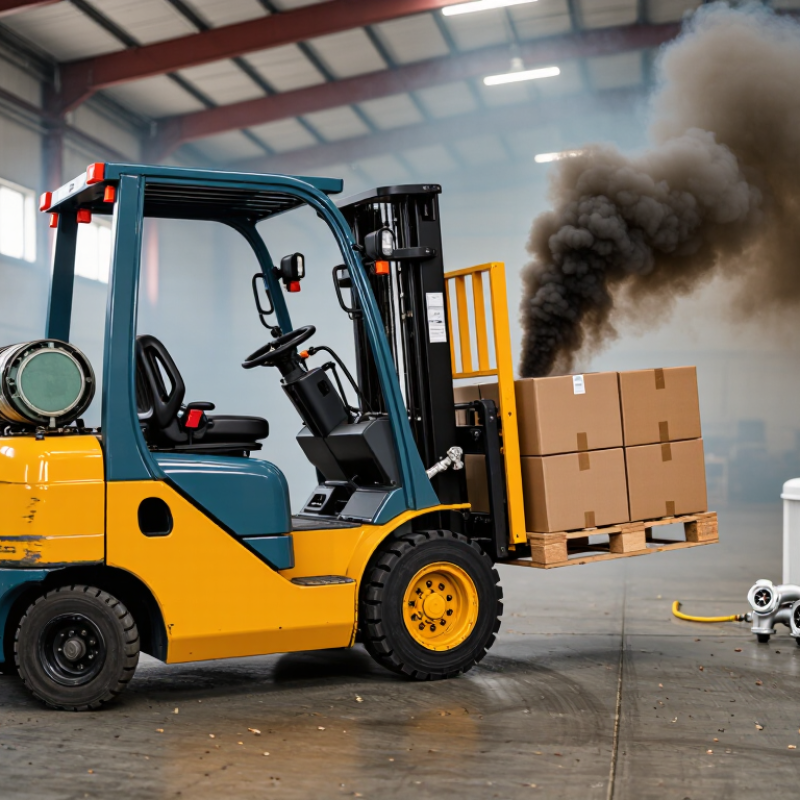
Why is my forklift emitting black smoke under heavy load? This question often appears when a diesel forklift climbs a ramp, lifts a pallet, or accelerates with a full attachment. Black smoke usually indicates incomplete combustion. The engine receives too much fuel, too little air, or both. A heavy load exposes the problem because injection demand rises sharply. It does not automatically mean the engine is failing.

The U.S. Environmental Protection Agency identifies particulate matter and visible smoke as important emissions concerns for nonroad compression-ignition engines. Its diesel-emissions guidance also links poor combustion, restricted airflow, and maintenance defects with increased exhaust pollution. NIOSH has separately warned that diesel exhaust contains fine particles and gases requiring effective workplace controls. These reports support a practical point: smoke is both a performance warning and an occupational exposure concern.

Common causes include a clogged air filter, damaged intake hose, restricted turbocharger, dirty injectors, incorrect injection timing, or excessive fuel delivery. A dark, dry puff may appear during sudden loading. Continuous thick smoke requires faster investigation. Check the filter restriction indicator, intake clamps, exhaust system, engine oil level, and fault codes. Do not guess.

Field inspections can miss simple details. I have seen operators replace injectors before finding a collapsed intake hose. That mistake wastes time and money. Engine temperature, smoke duration, fuel quality, altitude, and maintenance history all matter. LPG forklifts require a different diagnostic path, because black smoke is less typical. This 2026 guide examines the leading causes, safer inspection methods, and repair decisions for forklifts that smoke under heavy load. Be careful. A visible plume is evidence, not a complete diagnosis.
2026 Top Forklift Black Smoke Causes Under Heavy Load?

What Black Smoke Indicates in a Forklift Under Heavy Load

Black smoke from a forklift under heavy load usually indicates incomplete diesel combustion. The engine receives more fuel than available air can burn. A clogged air filter, restricted intake hose, faulty injector, or poor turbocharger performance may cause this imbalance. Excessive loading can expose the problem quickly, especially during ramp work or sudden lifting.

Watch the exhaust closely. A brief puff during acceleration may be less serious than continuous smoke. Thick, dark smoke with weak lifting power, rough running, or rising fuel use needs attention. In practical inspections, checking the air filter and intake path often reveals simple restrictions. Yet smoke color alone cannot confirm the fault. I have seen operators blame the injector when the real issue was an overloaded truck or a cold engine. That assumption wastes time.

Park the forklift safely and allow the engine to cool before inspection. Do not remove hot components or adjust fuel settings without proper training. A qualified technician should test injector spray, intake pressure, engine timing, and exhaust condition. Record when the smoke appears: startup, acceleration, ramp travel, or lifting near rated capacity. These details help connect the symptom with the operating demand. Keep loads within the equipment’s rated capacity, because repeated overloading can damage the engine and create unstable handling.

How Excessive Fuel Causes Black Smoke During High-Load Operation

2026 Top Forklift Black Smoke Causes Under Heavy Load?

How Excessive Fuel Causes Black Smoke During High-Load Operation

Black smoke under heavy load usually means the engine receives more fuel than available air can burn. The result is incomplete combustion and visible carbon particles from the exhaust. A forklift may run normally without a load, then smoke when lifting pallets or climbing a ramp. That change is an important clue.

Excessive fuel can come from a worn injector, incorrect injection timing, or a fuel pump delivering too much diesel. A restricted air filter creates a similar effect. It limits oxygen, so the extra fuel cannot burn cleanly. Check the filter housing, intake hose, and turbocharger system if fitted. A loose hose may also reduce intake pressure during acceleration.

Do not assume the injector is always responsible. I have seen operators replace fuel parts when a blocked intake screen caused the real problem. Check engine oil level, coolant temperature, and exhaust color together. Thick black smoke with poor power suggests an air or fuel imbalance. A trained technician should measure injection pressure and inspect injector spray patterns. Heavy lifting at low engine speed can worsen smoking, even when components are healthy. That operating habit deserves attention. Reduce unnecessary idling, maintain the correct service intervals, and avoid continuing work when smoke suddenly increases.

How Airflow Restrictions Affect Forklift Combustion and Exhaust

2026 Top Forklift Black Smoke Causes Under Heavy Load?

Black smoke under heavy load often signals an air–fuel imbalance. A diesel forklift needs sufficient oxygen to burn injected fuel cleanly. When the intake filter, duct, or pre-cleaner becomes restricted, airflow falls. Fuel delivery may continue. The result is incomplete combustion, visible soot, slower lifting, and higher exhaust temperature.

The effect can appear suddenly. A dusty warehouse, crushed filter pleats, or a loose intake hose may create the problem. SAE engine research has linked reduced intake flow with higher smoke and particulate emissions, especially during rapid load increases. The European Union’s Stage V framework uses a particulate-mass limit of 0.015 g/kWh for many non-road diesel engines. That figure is not a forklift diagnosis, but it shows how tightly modern equipment controls soot. A dark exhaust plume deserves attention, even when the machine still operates.

Tips: Check the air filter indicator before replacing parts. Inspect the intake hose for collapsed sections and oily dust marks. Measure intake restriction with a calibrated gauge. Compare readings with the service specification. Clean the radiator and cooling screens, too. Overlooking them is common. Also inspect turbocharger hoses, if fitted, and confirm injector condition after airflow checks. The U.S. EPA’s nonroad diesel guidance treats maintenance as a key factor in controlling particulate emissions. In practice, operators often blame injectors first. That assumption can waste time. Shutdowns during peak work may reveal the fault more clearly than idling tests.

How Engine, Injection, and Turbocharger Problems Produce Smoke

2026 Top Forklift Black Smoke Causes Under Heavy Load

How Engine, Injection, and Turbocharger Problems Produce Smoke

Black smoke under heavy load usually means the engine receives more fuel than available air can burn. The exhaust may darken when lifting a rated load, climbing a ramp, or accelerating suddenly. A restricted air filter is a common starting point. Dust can clog its paper element, reducing airflow before the operator notices power loss. In a workshop, I check filter restriction, intake hoses, and clamps before replacing expensive parts. Simple faults are often overlooked.

Fuel injection problems create another pattern. Worn injectors may deliver a poor spray instead of a fine mist. Incorrect injection timing can also leave unburned fuel in the exhaust. Listen for a sharp combustion knock, uneven idle, or a strong diesel smell. A qualified technician should measure injector performance and inspect fuel pressure with approved equipment. Guessing from smoke color alone is unreliable.

Turbocharger faults become more visible during sustained lifting. A damaged compressor wheel, leaking boost hose, or sticking wastegate can limit intake air. The engine then burns heavily, while black soot collects around the tailpipe. Check for loose connections, unusual whistling, oil inside intake piping, and delayed boost response. Do not ignore a small leak. I have seen operators blame injectors when a cracked hose caused the real problem. Still, diagnosis is rarely perfect on the first visit. Load conditions, maintenance history, and exhaust temperature should be recorded before changing parts.

2026 Top Forklift Black Smoke Causes Under Heavy Load

Black smoke is produced when injected diesel fuel exceeds the available oxygen or cannot atomize and burn correctly. Restricted intake airflow, injector over-fueling or poor spray quality, and turbocharger boost loss are the main system-related causes under heavy load. The scores show diagnostic priority and are engineering reference values rather than fleet-wide failure statistics.

How to Diagnose and Correct Heavy-Load Black Smoke Safely

Black smoke under a heavy load usually means incomplete diesel combustion. The engine receives too much fuel or too little air. Do not guess. Move the forklift to a ventilated inspection area, apply the parking brake, and lower the forks fully. Keep people away from the exhaust stream. A hot engine and raised load create separate hazards.

Start with simple checks. Inspect the air filter for dust, oil, or collapse. Examine the intake hose for cracks and loose clamps. Check whether the load exceeds the rated capacity. An overloaded forklift may smoke because the engine is forced beyond its useful power range. Verify fuel quality and drain visible water from the fuel system. Follow the service manual.

Next, record when the smoke appears. Does it occur during acceleration, climbing, or steady lifting? A technician can then test injector spray, fuel pressure, turbocharger operation, and engine compression, when fitted. Never loosen high-pressure fuel lines while the engine runs. Never bypass a safety or emissions control. Replace damaged filters, repair intake leaks, and adjust or replace faulty fuel components through qualified service personnel. The diagnosis is not always neat. I would recheck the machine after each repair, because one missed clamp can bring the smoke back. Use a known safe load, clear the area, and watch exhaust color, engine response, temperature, and unusual noise. Stop testing if smoke thickens or the engine races unexpectedly.

FAQS

What does black smoke mean when a forklift lifts a heavy load?

It usually means incomplete fuel combustion. The engine receives more fuel than available air can burn. A brief puff may be minor. Continuous smoke needs inspection.

Why does black smoke appear only under heavy load?

Heavy lifting demands more engine power. A restricted intake may seem normal at idle but fail during lifting. Low engine speed can worsen the smoke.

Can a blocked air filter cause black exhaust?

Yes. A blocked filter limits oxygen entering the engine. Check the filter housing, intake hose, and pre-cleaner. Dusty pleats are a common clue.

Is the fuel injector always responsible for black smoke?

No. A loose intake hose or overloaded forklift may cause the same symptom. Injector spray and fuel pressure require qualified testing. Guessing wastes time.

What other signs should operators watch for?

Look for weak lifting, rough running, rising fuel use, or hotter exhaust. Record when smoke appears. Startup and ramp travel provide useful clues.

Can overloading create black smoke?

Yes. Exceeding rated capacity increases engine stress and handling risk. Repeated overloading may damage components. The smoke may reflect operation, not just a failed part.

What should I inspect before calling a technician?

Park safely and let the engine cool. Check the air filter, intake hose, cooling screens, oil level, and coolant temperature. Do not remove hot parts.

When should a qualified technician test the forklift?

Arrange testing when smoke becomes thick, continuous, or suddenly worse. A technician can check injection timing, spray patterns, intake pressure, and exhaust condition. Smoke color alone is not proof.

Conclusion

Black smoke from a forklift under heavy load usually indicates incomplete combustion, meaning the engine is receiving more fuel than the available air can burn. If you are asking, “Why is my forklift emitting black smoke under heavy load?” common causes include an overloaded fuel system, a clogged air filter, blocked intake passages, or restricted exhaust flow. These problems become more visible when the engine demands extra power, causing unburned fuel particles to leave through the exhaust.

Engine wear, faulty injectors, incorrect injection timing, and turbocharger problems can also reduce combustion efficiency and increase smoke. Diagnosis should begin with a safe visual inspection, checking air and fuel filters, intake hoses, exhaust passages, and warning indicators. If the issue continues, qualified technicians should test fuel pressure, injector performance, engine compression, and turbocharger operation. Correcting the problem promptly can improve power, reduce emissions, prevent further damage, and support safer forklift operation during demanding work.

Henry

Henry

Henry is a dedicated marketing professional with a profound expertise in the company's offerings. With years of experience in the industry, he possesses an impressive understanding of the market dynamics and consumer behaviors that drive success. Henry is committed to sharing his insights through......