In construction and land development, achieving optimal soil compaction is crucial. It affects stability, load-bearing capacity, and durability. Among various techniques, using a vibratory roller is a favored choice. But the question remains, “How to achieve 95% soil compaction with a vibratory roller?”
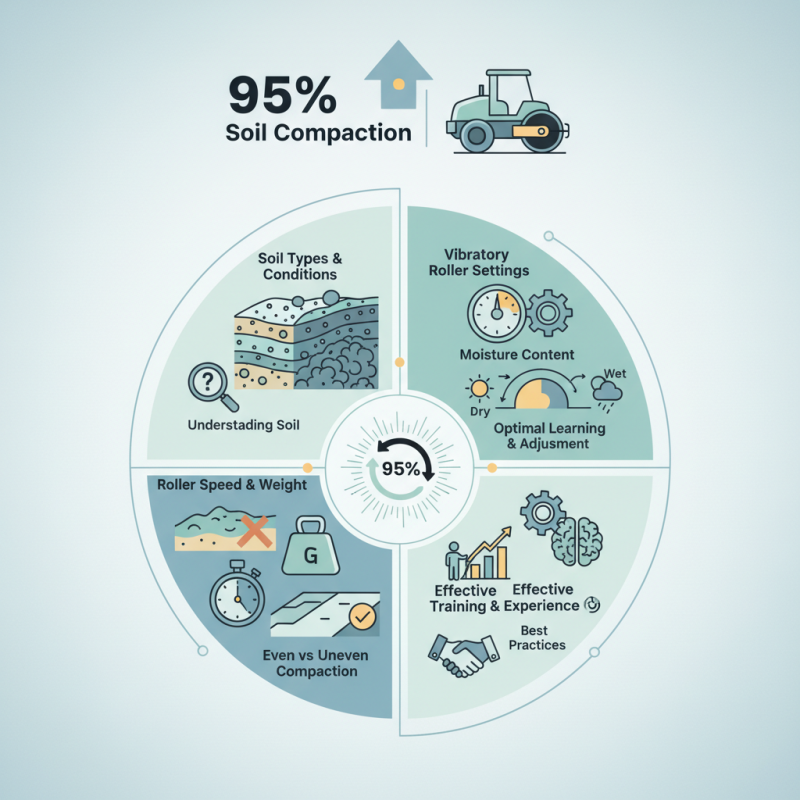
To reach this target, understanding soil types and conditions is vital. Not all soils respond the same way. For instance, sandy soils compact differently than clay soils. The vibratory roller’s settings must align with these conditions for effective compaction. Additionally, moisture content plays a significant role, as overly dry or wet soils can hinder the compaction process.
It's worth noting that the capability to achieve perfect compaction is ambitious. Many operators encounter challenges. Misjudgments in roller speed or weight can lead to uneven surfaces. This illustrates the importance of continuous learning and adjustment in the field. Effective training and experience can help improve outcomes. By focusing on best practices, one can enhance the chances of reaching that 95% goal.
Soil compaction is a vital factor in construction, affecting the stability and durability of structures. Properly compacted soil provides a strong base, reducing the risk of settling and shifting. According to the American Society of Civil Engineers, inadequate soil compaction can lead to major structural failures, accounting for over $1 billion in damages annually.
Achieving at least 95 percent soil compaction is critical. This benchmark minimizes voids within the soil, thus enhancing load-bearing capacity. Vibratory rollers are commonly used for this purpose, utilizing frequency and amplitude to effectively compact various soil types. However, operators must ensure proper technique to avoid over-compaction, which can lead to soil structure damage.
Despite advancements in technology, many construction projects still report inadequate compaction levels. A survey indicated that nearly 30 percent of projects fail to meet required compaction specifications. This inconsistency highlights a gap in industry practices, emphasizing the need for continuous training and adherence to protocols. Accurate moisture content measurement is also essential, as overly wet or dry soil can drastically affect compaction efficiency.
Vibratory rollers are essential machines in construction and civil engineering. They provide effective soil compaction, enhancing stability for structures above. These machines utilize heavy, vibrating drums to compress soil layers. The vibration increases the soil's density, ensuring a solid foundation.
Understanding how vibratory rollers function is crucial for optimal results. The roller's weight and the frequency of the vibrations significantly impact compaction levels. Operators must be knowledgeable about adjusting these parameters according to soil type and moisture content. While many achieve good results, some may overlook these factors. Compaction failures often arise from incorrect settings or inadequate passes.
Sometimes, achieving the desired 95 percent compaction is challenging. Each soil type reacts differently to vibration. Operators need to monitor progress carefully, making adjustments as necessary. Proper training and experience can prevent common pitfalls. Observing how different soil conditions respond can lead to better future practices.
Achieving 95 percent soil compaction is crucial for stable construction and landscaping projects. To start, selecting the right soil is essential. Different soil types respond differently to compaction. Cohesive soils, like clay, require more effort, while granular soils compact easily. Monitor moisture content; it plays a crucial role in effectiveness.
Once you've chosen the right soil, prepare the site. Clear debris to ensure even compaction. If the area is large, section it into smaller, manageable parts. Use a vibratory roller for efficiency. Operate it at a steady speed to allow for uniform compaction. Listen for consistent sounds—the absence of vibrations may indicate uneven compaction.
Always check your work. After compaction, test the density using a penetrometer. If you're falling short, adjust your approach. Revisit the moisture levels or the number of passes with the roller. Compaction is a science and an art. Each project is unique and may require different strategies. Be open to reflection and adjustments for best results.
| Layer Depth (inches) | Weight of Roller (tons) | Vibration Frequency (Hz) | Passes Required | Achieved Compaction (%) |
|---|---|---|---|---|
| 6 | 10 | 55 | 3 | 95 |
| 8 | 12 | 60 | 4 | 93 |
| 10 | 15 | 62 | 5 | 91 |
| 12 | 20 | 65 | 6 | 89 |
Achieving 95 percent soil compaction with a vibratory roller requires skill and knowledge.
Effective operation greatly impacts project success. Proper technique and understanding machine dynamics are critical.
One essential tip is to ensure the correct settings for frequency and amplitude.
Adjust these according to soil type.
Sandy soils benefit from higher frequencies, while clay requires lower settings.
Additionally, monitor the roller speed. Too fast can lead to insufficient compaction.
Another important practice
is to maintain a consistent overlap.
This ensures uniform compaction across the work area. Aim for at least 50 percent overlap with each pass.
Take time to assess the area visually. Identifying spots that appear less compacted helps improve results.
Operating a vibratory roller isn't just about speed. Operators need to focus on maintaining control.
It’s common to overlook small areas, leading to reduced overall compaction.
Reflect on past projects; analyze where improvements can be made.
Adaptability is key to mastering vibratory roller techniques.
Achieving optimal soil compaction with vibratory rollers is essential for ensuring the stability of any construction project. However, many operators make common mistakes that hinder this process. For instance, inadequate moisture content in the soil can lead to unsatisfactory compaction levels. According to a study conducted by the American Society of Civil Engineers, achieving a moisture content between 8% and 12% significantly improves compaction results.
Another frequent error is not allowing sufficient time for the rollers to perform their task. Compacting soil too quickly can cause uneven surfaces and increase the risk of settling later on. Proper vibration frequency also plays a critical role; studies indicate that a frequency of 2000-3000 vibrations per minute is optimal for most soil types. Additionally, neglecting the soil's density can result in less than ideal results. The National Asphalt Pavement Association recommends regular density testing, emphasizing that compaction should not exceed 95% of the maximum density determined by Proctor tests.
It’s also vital to choose the right roller size for the project. Using an oversized roller may lead to crushing the desired soil structure. Observing the roller's impact during operation can reveal insights into the soil's behavior under pressure. Remember, achieving maximum compaction isn’t just about equipment; it’s also about how the operator understands and respects the soil dynamics involved.
: Soil compaction ensures stability for construction and landscaping. It helps prevent future settling and uneven surfaces.
Granular soils, like sand, compact easily. Cohesive soils, such as clay, require more effort and time.
Moisture content plays a crucial role. Ideal levels between 8% and 12% improve compaction effectiveness significantly.
A vibratory roller is efficient for compaction. It helps achieve uniform density but must be operated correctly.
Listen for consistent sounds during compaction. An absence of vibrations may indicate uneven compaction.
Check moisture levels and roller passes. Adjust your approach based on soil response and test results.
Regular testing is essential. It helps ensure compaction doesn't exceed 95% of maximum density from Proctor tests.
Compacting too quickly can cause uneven surfaces. Patience is crucial for achieving desired compaction levels.
Using an oversized roller can damage soil structure. The right size helps maintain soil integrity during compaction.
The operator must understand soil dynamics. Proper technique and adjustments ensure better compaction results.
Achieving optimal soil compaction is crucial in construction to ensure the stability and longevity of structures. The article titled "Achieve 95 Percent Soil Compaction with Vibratory Roller Tips" delves into the significance of soil compaction, elaborating on how vibratory rollers effectively enhance this process. It provides a comprehensive step-by-step guide on how to achieve 95% soil compaction with a vibratory roller, emphasizing the importance of understanding the machinery's functionality and best operating practices.
Key practices for operating a vibratory roller effectively are discussed, along with common pitfalls that operators should avoid to ensure successful compaction. By following these insights and techniques, construction professionals can significantly improve soil compaction results, leading to more durable and reliable infrastructure. Understanding these principles is essential for anyone involved in site preparation and construction projects.

BestDeal Forklifts