2026 Best Road Roller How to Prevent Washboarding?

Time:2026-10-07 Author:Sophia
0%

Washboarding is one of the most visible signs of poor compaction control. It appears as repeated ridges across a gravel road, often near curves, intersections, or braking areas. Drivers feel every ridge through the steering wheel. Operators see the problem, but the cause is not always obvious.

This guide examines the 2026 best road roller practices for preventing washboarding. It focuses on roller selection, vibration settings, travel speed, moisture control, and consistent passes. The key question is: How to prevent "washboarding" effects when using a road roller? A reliable answer begins with understanding the aggregate beneath the drum. Dry material may shift instead of locking together. Excess water can create pumping and weak spots.

Experienced operators know that vibration is not automatically better. High amplitude, excessive speed, or sudden direction changes can disturb the surface. A smooth, steady rhythm usually produces better results. Watch the material closely. If the drum starts pushing a wave, stop and reassess. That small warning matters.

Modern road rollers provide useful controls, but technology cannot replace field judgment. Even the best machine may leave ridges when the base is poorly graded or the lift is too thick. This guide therefore combines manufacturer recommendations, practical site observations, and proven compaction principles. Some results may still require adjustment. That is normal. Soil and aggregate rarely behave exactly as expected. Careful testing, documented passes, and regular inspection remain the safest path to a durable, even road surface.
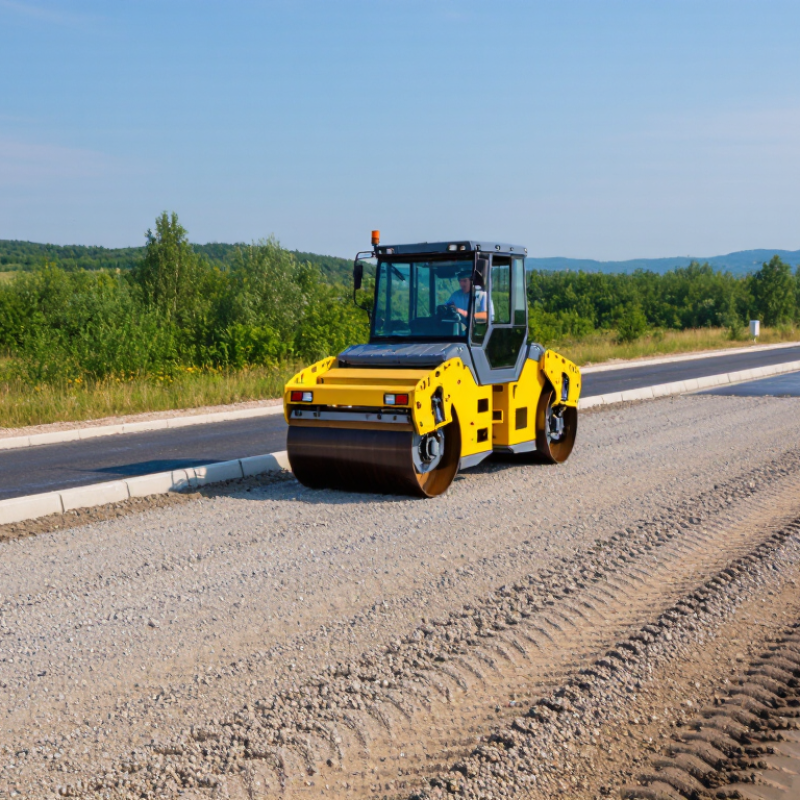
2026 Best Road Roller How to Prevent Washboarding?

What Is Washboarding and Why Does It Occur?

Washboarding is a repeating series of ridges and shallow valleys across an unpaved road. It resembles a washboard, hence the name. Vehicle tires strike each ridge, causing vibration, noise, and faster surface damage. In the field, the pattern often appears on curves, slopes, and loose approaches. It can develop quickly after traffic begins using freshly graded material. Sometimes, the ridges are only a few millimeters high. They still affect steering and braking.

Why does it occur? Repeated wheel loads push loose particles forward, then tires bounce over the displaced material. Excess moisture can soften the layer, while very dry material may fail to bind. Poor grading, uneven aggregate sizes, and insufficient compaction also increase the risk. Speed matters. Faster vehicles create stronger impacts and repeat the bouncing cycle. I have seen operators blame the roller, although traffic, drainage, and material moisture were the real causes. That judgment is not always fair.

A road roller helps prevent washboarding when the base is graded evenly and compacted at the correct moisture level. Operators should make controlled passes, avoid overworking one lane, and check density across the full width. Smooth drums can seal the surface, but they cannot correct a weak foundation. Vibratory action may help, yet excessive vibration can loosen poorly prepared material. Inspect the road after early traffic, not weeks later. Small ridges are easier to repair. There is no perfect setting for every soil.

How to Prepare the Road Surface Before Rolling

2026 Best Road Roller: How to Prevent Washboarding?

How to Prepare the Road Surface Before Rolling

Washboarding often begins before the roller starts. Loose aggregate, dry fines, and uneven moisture create weak zones. I inspect the surface by walking it, not only by watching the grader. Soft patches need reshaping before compaction. Ruts should be filled with properly graded material, not coarse stone alone. The United States Forest Service Gravel Roads Manual recommends a crown of about 4% for drainage. Standing water quickly changes a stable road into a corrugated one.

Moisture control matters. A field test should show damp material that holds together briefly, without becoming muddy. The Federal Highway Administration notes that moisture variation strongly affects density and long-term pavement performance. Apply water in light passes. Heavy spraying can produce a hard crust over a weak layer. That mistake is common. I have made it myself.

Check the surface thickness before rolling. Thin patches may densify too quickly, while deep loose layers remain unstable underneath. Use a proof pass at low speed, then correct visible movement. Keep the roller moving smoothly, with limited sharp turns and braking. For asphalt, follow the project’s approved temperature range and compaction plan; the Asphalt Institute identifies temperature, roller speed, and coverage as key density controls. A simple inspection log helps: moisture, pass count, speed, and surface response. Records reveal patterns that memory misses.

2026 Best Road Roller: How to Prevent Washboarding? – How to Prepare the Road Surface Before Rolling

Preparation / Rolling Factor Recommended Practice Typical Control Range or Check How It Helps Prevent Washboarding
Remove loose material Blade, scarify, or sweep loose aggregate and dry fines from the travel path before compaction. No visible ridges, windrows, or uncompacted piles in the rolling lane. Reduces localized impacts that can initiate regularly spaced surface corrugations.
Correct the road crown and crossfall Shape the surface to the specified profile before final compaction, maintaining positive drainage. Verify against the project design; many gravel roads use approximately 3–5% crown, subject to local conditions. Prevents water from softening isolated areas and reduces uneven roller resistance.
Repair soft spots Excavate unstable material, improve drainage, and replace it with suitable, well-graded fill before rolling. No pumping, rutting, or visible deflection under a loaded test vehicle. Stops the drum from bouncing or losing uniform contact over weak sections.
Use well-graded aggregate Blend coarse and fine particles so the material can interlock and compact into a stable layer. Confirm gradation and plasticity meet the project specification through laboratory or field testing. Improves particle interlock and reduces loose particles being displaced by traffic or vibration.
Control moisture Mix water uniformly through the lift; avoid rolling material that is dusty-dry, saturated, or visibly pumping. Target the project-specified optimum moisture content; for many soils, laboratory Proctor testing is used. Uniform moisture improves density and prevents uneven deformation beneath the drum.
Set the lift thickness Place and compact material in layers thin enough for the roller to influence the full depth. Follow the material and equipment specification; verify density at the bottom and top of the lift when required. Prevents a dense crust over a weak lower layer that can deform into corrugations.
Establish a test strip Use a representative section to determine roller type, speed, vibration setting, and passes. Record density, moisture, speed, amplitude, frequency, and number of passes. Creates a controlled rolling pattern instead of relying on trial-and-error during production.
Select the correct rolling mode Begin with static or low-amplitude rolling when the surface is unstable; use vibration only when the material can support it. Adjust amplitude and frequency to material response; stop vibration if the surface starts to shove or ripple. Avoids excessive drum movement that can create or enlarge periodic ridges.
Maintain steady travel speed Operate at a consistent, moderate speed and avoid abrupt acceleration, braking, or turning on the loose surface. Use the test-strip speed; maintain a uniform pace across each pass. Reduces changes in impact spacing and shear forces that contribute to washboarding.
Keep drum contact uniform Check drum cleanliness, scraper condition, tire pressure where applicable, and proper ballast or operating weight. No material buildup or irregular contact marks across the compacted width. Ensures even pressure and prevents alternating dense and loose bands.
Use consistent pass overlap Overlap adjacent passes evenly and keep the roller aligned with the planned rolling pattern. A common field practice is approximately 100–200 mm of overlap, unless the specification states otherwise. Prevents longitudinal strips of different density that can develop into surface defects.
Avoid sharp turns during compaction Make gradual turns on compacted or stable ground, and reverse smoothly without spinning the drum or tires. Inspect turning areas for scuffing, displacement, or transverse ridges. Limits lateral shearing and aggregate displacement at the surface.
Verify density and surface condition Check density, moisture, smoothness, crossfall, and visible defects after each rolling sequence. Meet the project density requirement; do not use additional passes to compensate for incorrect moisture or poor grading. Identifies the cause early so the surface can be reworked before traffic locks in the pattern.
Finish with a smooth surface Use a final static pass or appropriate finishing operation to close minor marks without overworking the layer. Surface should be tight, uniform, well-drained, and free of visible corrugation or loose windrows. Removes minor irregularities and leaves a stable platform for traffic and future maintenance.
Field note: Washboarding is usually associated with loose or poorly graded material, incorrect moisture, excessive speed, abrupt operation, and uneven compaction. Final settings should always follow the project specification, material test results, and actual field response.

How to Set Roller Vibration, Speed, and Pass Patterns

2026 Best Road Roller: How to Prevent Washboarding?

Washboarding often starts with an unstable surface, excessive vibration, or uneven roller speed. The Federal Highway Administration’s FHWA-HIF-17-014 guidance identifies speed, frequency, and amplitude as critical compaction controls. Set vibration before rolling, then keep it consistent. For example, at 3,000 vibrations per minute and 2 mph, a drum creates about 17 impacts per foot. At 4 mph, that falls to roughly 9 impacts. The faster pass may leave weak, visibly ridged areas.

The Asphalt Institute’s MS-22 guidance commonly places vibratory rolling near 2–3 mph, depending on mix temperature and stiffness. Use lower speed on tender material. Use moderate amplitude first. Increase amplitude only when density readings show a real need. Keep each pass straight, with a consistent overlap of 150–300 millimeters. Offset transverse joints between passes. Sudden braking can print another wave into the mat. I still check the surface from several angles; a smooth-looking lane can hide poor density.

Tips: Run a short test strip. Record speed, frequency, amplitude, temperature, and passes. Confirm density with calibrated testing equipment, not appearance alone. Stop vibration before reversing, unless the roller system is designed for controlled reversal. No setting works everywhere. Mix design, moisture, grade, and operator timing can change the result. Review the pattern when the first readings disagree.

How to Operate a Road Roller to Prevent Corrugation

Preventing washboarding starts with controlling the roller, not simply increasing compaction force. Before rolling, inspect the base for uneven moisture, loose stones, and soft pockets. Correct these defects before the drum arrives. Moisture matters. Material that is too dry may move under vibration, while excessive water can create pumping and weak spots. Follow the project’s tested moisture range.

Keep a steady speed during each pass. Sudden acceleration, braking, or changes in vibration can create uneven waves. Use vibration only when the material can respond properly. On the first passes, a lower amplitude may reduce displacement. Increase compaction gradually after the surface becomes stable. Overlapping passes should remain consistent, usually by a controlled portion of the drum width. Avoid stopping on fresh, uncompacted material.

I have seen corrugation develop when an operator turned sharply near a lane edge. Make wide turns on firm ground whenever possible. Roll in a planned pattern, and keep the drum aligned with the travel path. If the surface begins to ripple, stop vibrating and inspect the cause. Continuing may make the defect deeper. Check the surface after every few passes, because the roller can hide early movement. This routine takes time, but skipping it often costs more. Even experienced operators can misjudge moisture after weather changes. Record the conditions and adjust the next pass carefully.

How to Inspect and Correct Washboarding After Compaction

After compaction, inspect the surface before opening it to traffic. Washboarding appears as regular ridges and valleys across the travel path. Walk the lane at a low angle; shadows often reveal shallow corrugations. Place a three-meter straightedge across the pattern and measure gaps with a feeler gauge. Record ridge spacing, loose material, moisture, and the roller’s operating speed. If density is acceptable but the profile is uneven, more rolling may worsen it.

The safest correction begins by identifying the cause, not hiding the symptom. A fast pass, excessive vibration, dry mix, or poor overlap can create repeated waves. Do not chase the pattern. Scarify the affected area to its full depth, then reshape it with controlled grading. Add water only when testing confirms the material is too dry. Excess moisture can weaken the layer. Compact in shorter, overlapping passes, keeping speed steady and vibration suited to the lift thickness. A qualified technician should verify density and crossfall after each correction.

Inspect again with the straightedge, stringline, and level. The surface should drain without birdbaths, ridges, or abrupt transitions. Check the roller drum for buildup, because stuck material can disturb the finish. A field lesson worth admitting is simple: crews sometimes repair the ridges while leaving the loose layer untouched. The surface may look smooth for one day, then the waves return. Keep inspection notes, test results, and weather conditions with the compaction record.

2026 Best Road Roller: How to Prevent Washboarding?

Washboarding amplitude measured at 5 m inspection intervals before and after corrective regrading and controlled final rolling.

Inspect the compacted surface with a straightedge and record the peak-to-trough surface variation. The example readings show that removing loose ridges, restoring suitable moisture, reducing excessive roller vibration, and making a controlled finishing pass can reduce washboarding amplitude to approximately 3–5 mm.

FAQS

What causes washboarding on a road surface?

It often begins with loose aggregate, dry fines, uneven moisture, or weak patches. The ridges may appear after rolling.

How should I inspect the surface before compaction?

Walk the surface and check soft patches, ruts, standing water, and uneven thickness. A grader view alone can miss problems.

How should ruts be repaired before rolling?

Fill ruts with properly graded material. Coarse stone alone may leave gaps and create unstable pockets.

Why is moisture control important?

Damp material should hold together briefly without becoming muddy. Apply water in light passes. Heavy spraying can crust the top.

What road shape supports drainage?

A crown near 4% can help water leave the surface. Standing water can quickly turn a stable road into corrugation.

How do roller speed and vibration affect compaction?

Higher speed reduces impacts per foot. At 3,000 vibrations per minute, 2 mph gives about 17 impacts per foot.

What rolling speed is commonly suitable for asphalt?

Vibratory rolling often works near 2–3 mph, depending on temperature and mix stiffness. Use lower speed on tender material.

How should vibration settings be adjusted?

Start with moderate amplitude and keep frequency consistent. Increase amplitude only when calibrated density results show a need.

What pass pattern can reduce surface waves?

Keep passes straight and overlap them by about 150–300 millimeters. Avoid sudden braking and sharp turns.

How can operators confirm that compaction is working?

Use a short test strip and record speed, frequency, amplitude, temperature, and pass count. Appearance alone can mislead.

What should be checked when the surface looks smooth?

Check from several angles and review density readings. A smooth lane can still contain weak or poorly compacted areas.

Why keep a compaction inspection log?

Records show patterns that memory misses. Still, the log may not explain every result without testing and judgment.

Conclusion

Washboarding, or corrugation, is a series of regular ridges and depressions that can develop when a road roller applies excessive vibration, moves too quickly, or compacts an uneven, overly dry, or poorly graded surface. Before rolling, prepare the road by removing loose material, correcting soft spots, controlling moisture, and spreading aggregate evenly. A stable and uniform foundation helps the roller achieve consistent density without shifting the surface.

How to prevent "washboarding" effects when using a road roller? Select a suitable vibration setting, maintain a steady moderate speed, and use organized pass patterns with consistent overlap. Avoid stopping, accelerating, or changing direction abruptly while vibration is active. Monitor the surface after each pass, especially near joints, edges, and turning areas. If corrugation appears, reduce vibration, adjust moisture or material distribution, and regrade the affected section before continuing. Final inspection should confirm a smooth, uniform surface and adequate compaction across the entire road.

Sophia

Sophia

Sophia is a dedicated marketing professional with an exceptional depth of knowledge about her company's products and services. With a keen understanding of market trends and customer needs, she crafts insightful blog posts that not only inform but also engage readers, enriching the company’s online......